

Colombian Artist Luis Alberto Hernández Mines a Rich Vein of Turmoil and Wonder in Anaimas
In his Anaimas series, Colombian artist Luis Alberto Hernández turns fractured surfaces, industrial remnants, and luminous color into an unsettling encounter with the Anaime River region, asking what remains when a landscape becomes a livelihood, a commodity, and a wound.
The Seduction of the Scar
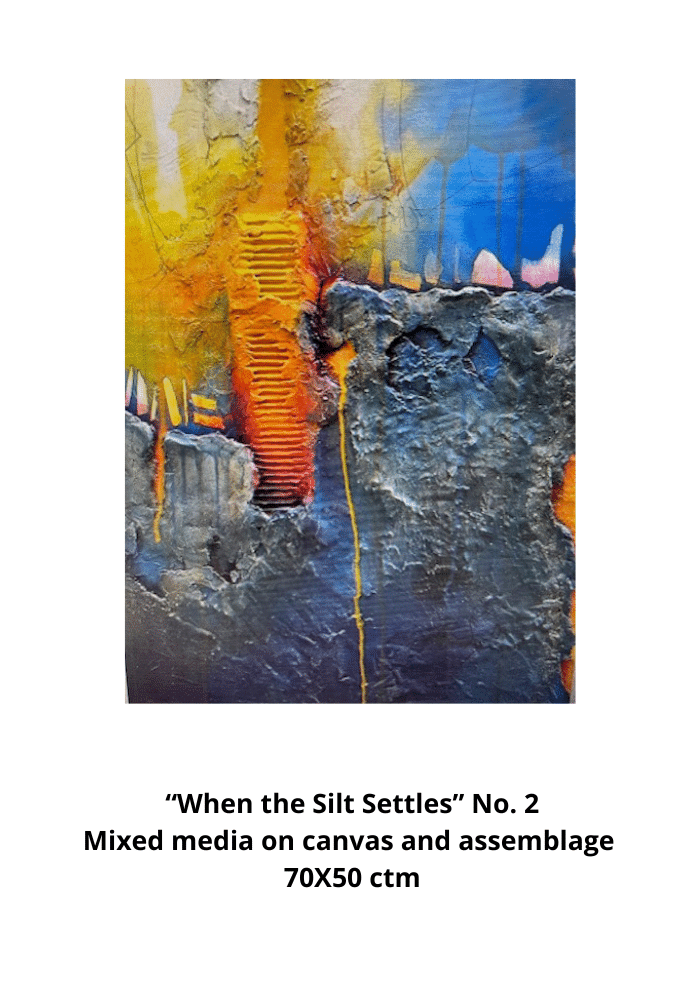
The yellow gets there first. In “When the Silt Settles”, it burns across the upper left, gathers into a ribbed orange column and spills down a dark, crusted face. That last thread of brightness nearly reaches the bottom. The eye follows willingly, then discovers how little room there is to move. . . . The painting organizes its pressure with precision. A heavy gray formation occupies much of the lower surface, its ragged summit interrupting an expanse of blue.
Hernández locates Anaimas in experiences with a mining community along the Anaime River in Cajamarca, Tolima. His accompanying statement describes field research, collecting, and the incorporation of industrial remnants. Across the works, acrylic painting and assemblage make the landscape feel handled, compressed, and interrupted.
What the River Carries
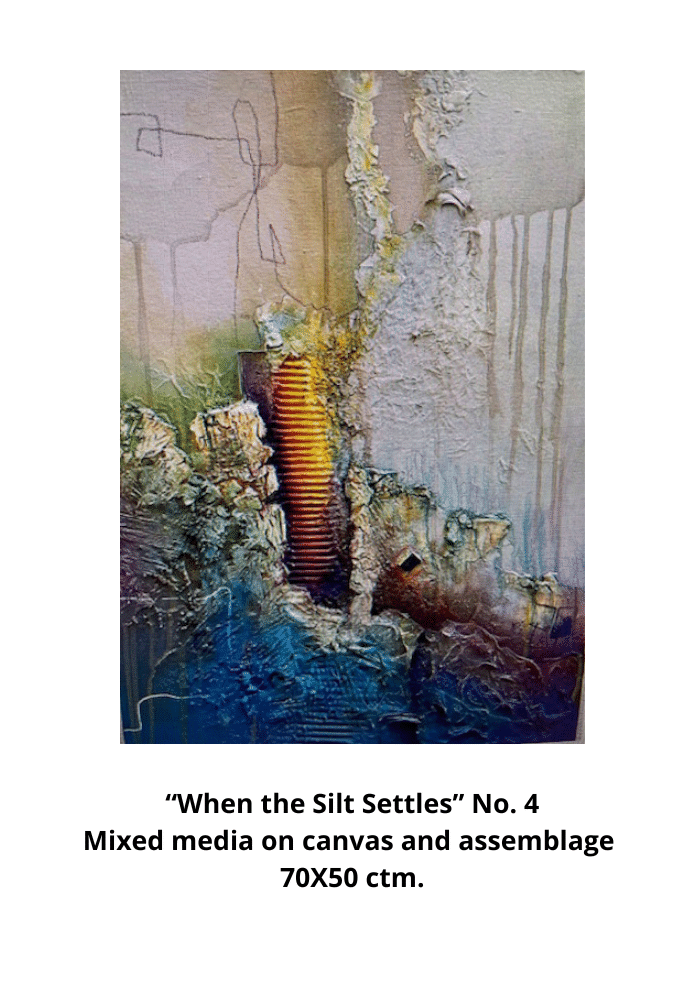
In “When the Silt Settles” a pale upper field gives way to a congested lower region of blue, green, and brown. A corrugated vertical element glows yellow at its crown and deepens toward red below. Its regular ridges read almost like a measuring instrument embedded in terrain that refuses to be measured.
Thin drips descend through the pale area, while thick accumulations appear arrested below. Liquid movement and hardened residue occupy the same surface. Hernández gives time two textures: the fleeting trace of passage and the stubborn bulk of what passage leaves behind.
That complexity belongs beside Hernández’s account of experiences with a mining community. Livelihood, environmental dependence and opposition to extraction can intersect uneasily. The pictures cannot establish responsibility for a particular damaged riverbank.
A Landscape That Keeps Its Distance
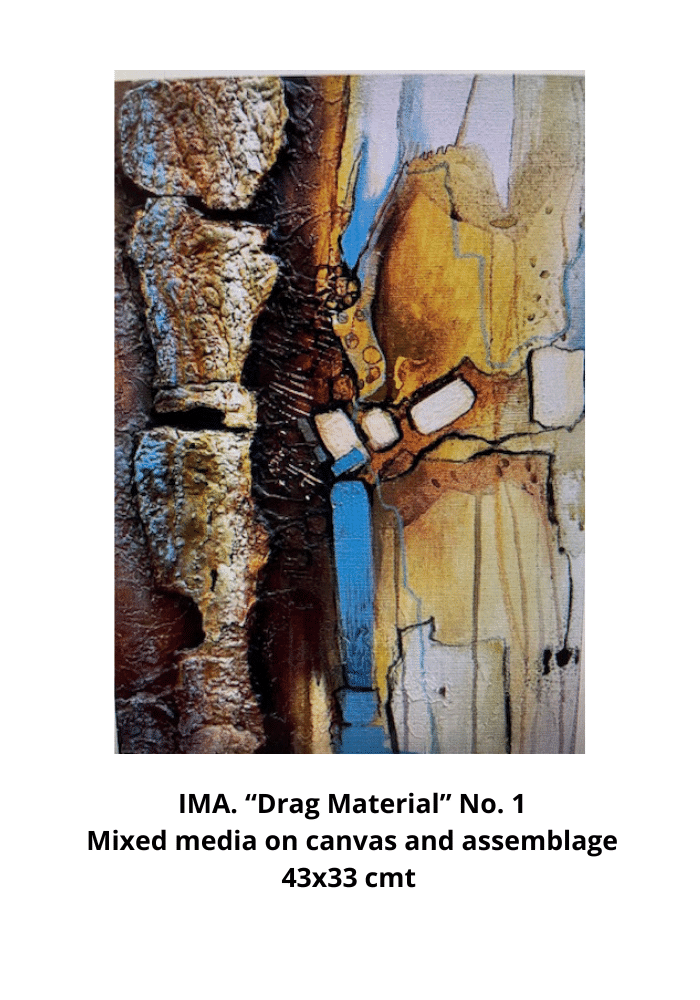
Ima. Material de Arrastre No. 1, brings the conflict close. Rough, stone-like forms stack along the left edge. Across the adjoining ochre field, pale angular shapes form an interrupted crossing. Fine black lines wander through thinner passages where the canvas weave remains visible.
Those exposed threads are consequential. They reveal the support beneath the apparent geology, preventing the illusion from fully settling. The viewer oscillates between reading a broken terrain and recognizing a constructed painting.
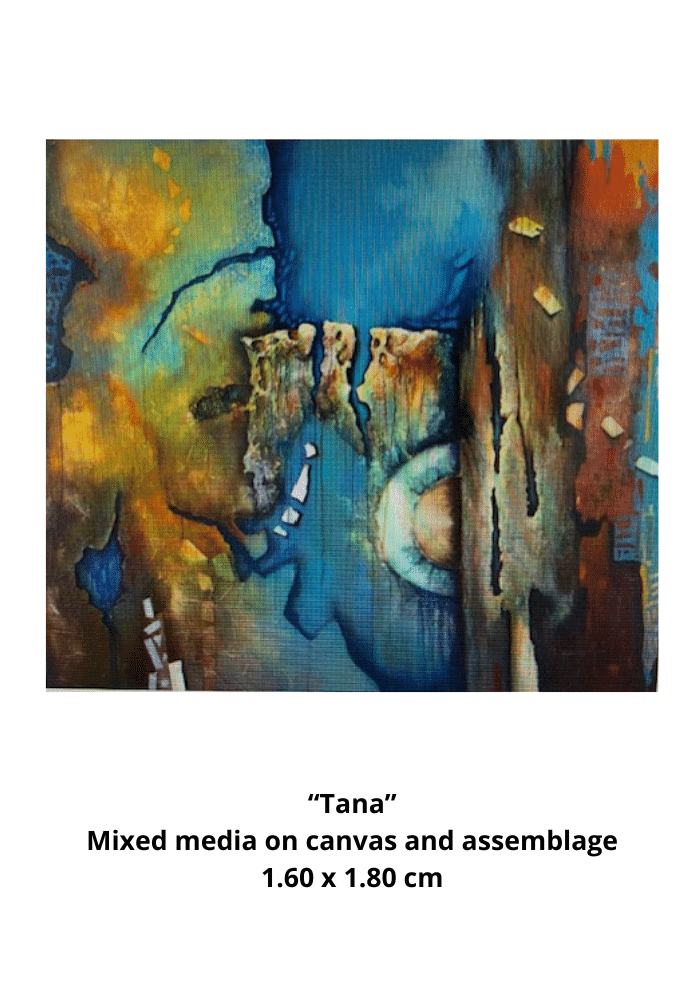
Tana (Agua),. Its canvas area is nearly nineteen times that of Ima. That difference changes the likely bodily encounter: the smaller work invites scrutiny, while Tana approaches the dimensions of an environment confronting the viewer.
Here, turquoise opens a central channel between ochre masses and a rust-colored vertical band. A pale circular form appears partly concealed near the right. It can suggest a pipe opening or an eye, but the obstruction prevents either reading from becoming secure. Looking becomes an attempt to recover what has already been withheld.
The series carries a risk: its richly worked surfaces could turn ecological damage into luxurious decoration. Its strongest passages resist that conversion through blockage, awkward junctions and the refusal of an encompassing view. There is no elevated vantage from which everything becomes orderly.
Their absence leaves the paintings answerable to lives beyond the frame. A beautiful surface cannot tell us what a household earns, what its water carries, or who makes decisions upstream. Hernández’s achievement is to make the surface hold those questions open.
Contact: +57 317 8853122 – luishernandez.artista@gmail.com